

'Universal Language': a cinematic collision of cultures you won't see coming
film review of Matthew Rankin's 'Universal Language'
If there’s one word to describe Matthew Rankin’s latest film, it’s absurd.
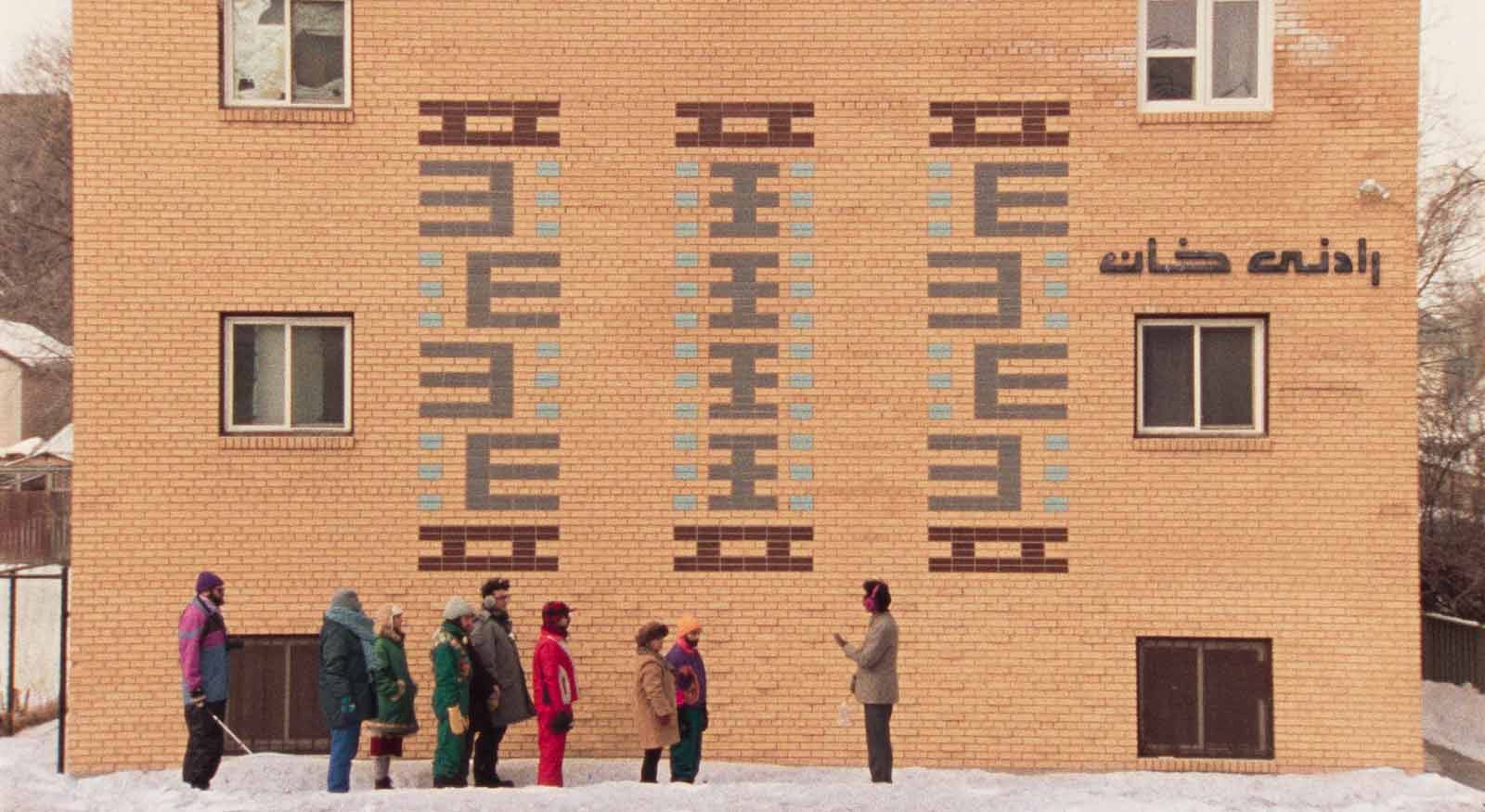
In Universal Language, the Canadian experimental writer-director establishes a world so strange that it demands a closer inspection. It’s snowy Winnipeg—but not as you know it. Rankin’s Winnipeg is reimagined with an Iranian identity: Persian script adorns building exteriors, Tim Hortons is swapped out for a cozy Iranian coffeehouse, and characters speak in Farsi to one another.
This cross-cultural exercise stemmed from Rankin’s love for Iranian cinema; his biggest exposure being film school in Iran at the age of 21. “The Iranian cinema, of course, is extremely vast and multifaceted, but the cinema that was particularly interesting to me is what I like to describe as meta-realism,” he says. Upon returning to Canada, he brought this sensibility back to his filmmaking, and Universal Language, in many ways, is the culmination of all the curiosity.
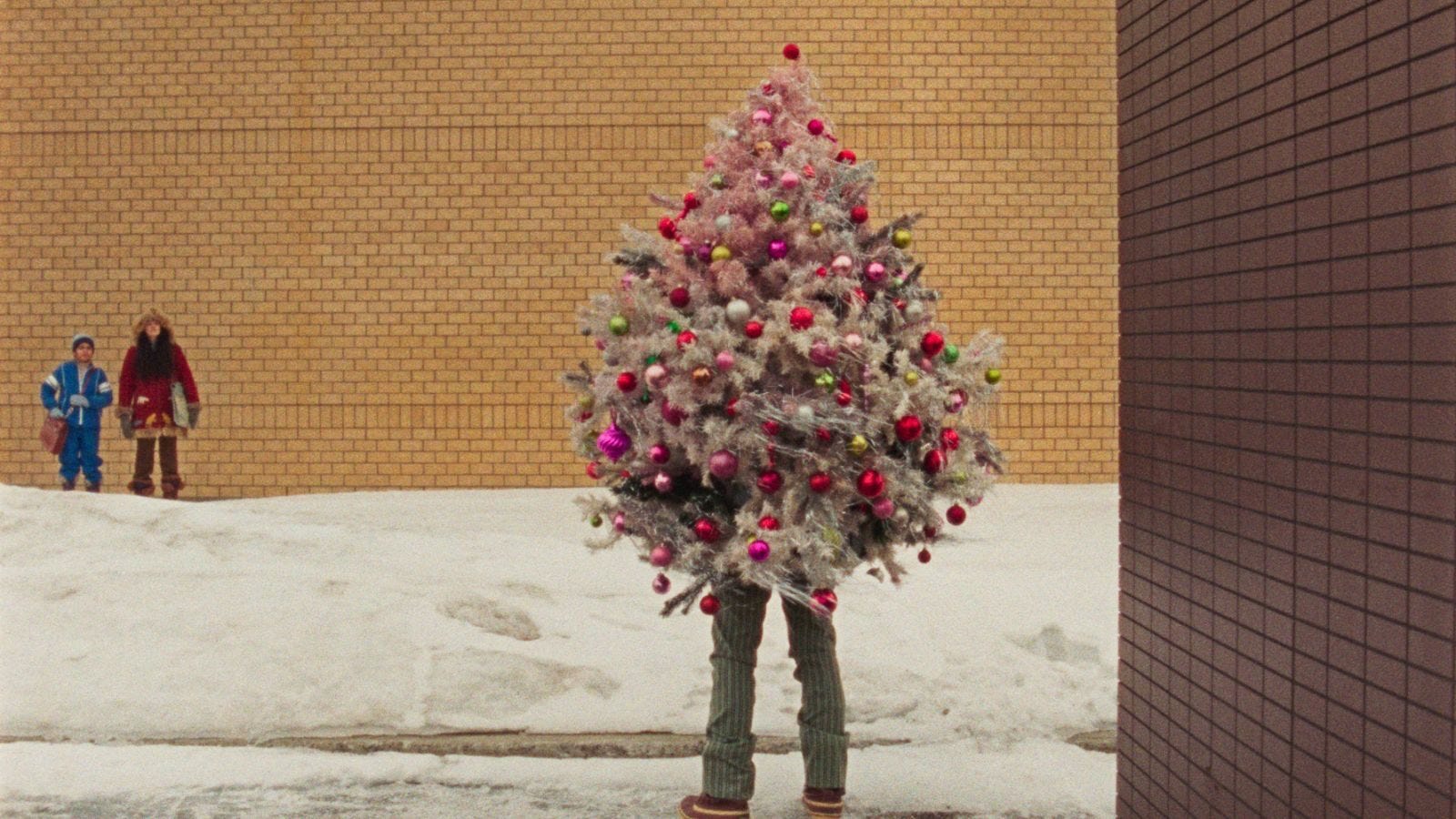
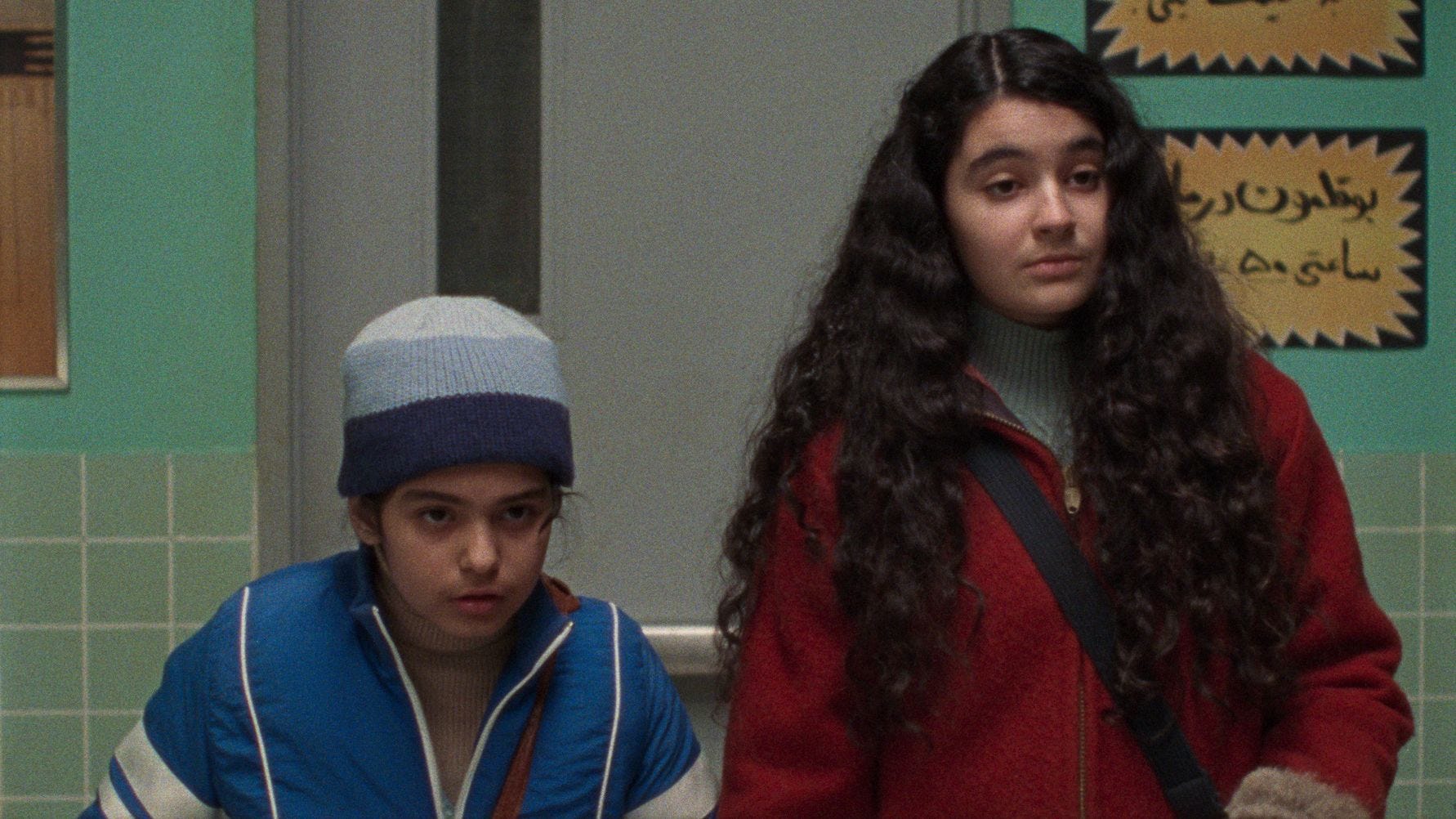
The film’s first act is led by two siblings, Negin and Nazgol, who discover an Iranian bill frozen in the ice below them. Wanting to purchase a new pair of glasses for their classmate Omid, they embark on a series of hilarious schemes to retrieve the Rial. The duo journeys through Winnipeg’s charming districts, crossing paths with an array of eccentric characters, including a man dressed as a Christmas tree and a singing butcher at a turkey shop. Bizarre moments like these had my audience in stitches, keeping them thoroughly engaged as the narrative takes bold turns.
Amidst the absurdity lies the film’s beating heart: Matthew, played by Rankin himself. Matthew is an unfulfilled government staff from Quebec who returns to Winnipeg to visit his ailing mother. On his way back, he slowly realizes his hometown feels deeply foreign now. His family home has been sold to a new family, and his mother is now living with Massoud, a tour guide. In the day, Massoud leads visitors through Winnipeg’s historic sites—places forgotten by time yet still carrying echoes of their stories. By night, he returns to care for Matthew’s mother.
This storyline, along with other eccentric ones, weave together intricately to form a complex web of human connections in Rankin’s Winnipeg. Their intersections might seem ordinary at first glance, but they’re orchestrated with a cleverness to keep the film dynamic and unpredictable.
I went into this film unsure of what to expect. Honestly, I found myself constantly trying to adjust to film’s absurd tone when it first started. But once the film finds its rhythm, or rather, once I found mine, it achieves a pitch-perfect balance between comedy and drama, and I was thoroughly enjoying myself.
I loved the constant ebb and flow between laugh-out-loud moments and surprisingly introspective beats. One minute, you’re laughing at a turkey who sits on the bus unassumingly like a regular passenger; the next, you’re reflecting on your own sense of home and belonging. It’s truly a miracle how Universal Language manages to juggle these wildly different tones without missing a beat.
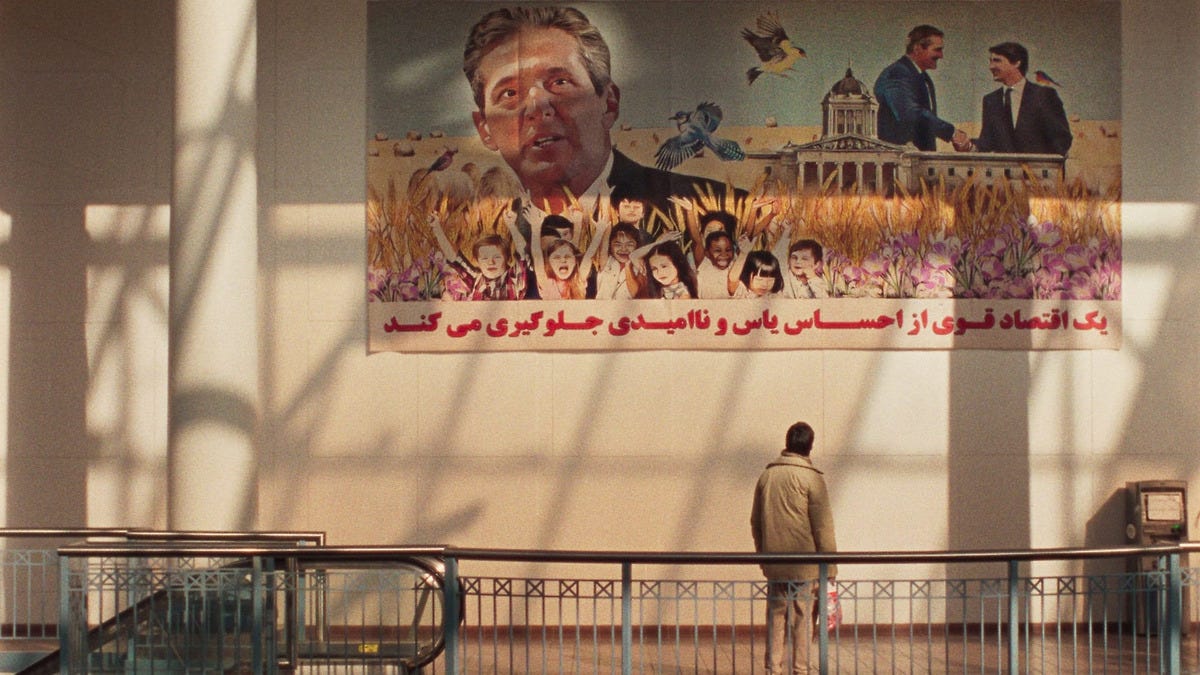
On a technical level, the cinematography is breathtaking, with Winnipeg and all its vastness being a character of its own. The empty malls, cold terrains, and isolated shots of the city all contribute to a sense of solitary meditation that mirrors the film’s themes. Each frame is meticulously composed to emphasize how we are cast adrift in an indifferent world. It’s haunting, but also oddly comforting, like the city is quietly looking out for these characters.
In Rankin’s rule-breaking world, logic is abandoned for art’s sake. He crafts a boundless canvas, inviting us to project our own stories onto his absurd Winnipeg. It’s in this fantastical space that Universal Language becomes more than just a film; it’s a reflection of our personal quests for identity and belonging, set against the volatility of life itself.
Watching Universal Language made me reflect on my own life in surprising ways. As the characters grapple with disorientation, I found myself ruminating on my idea of home and whether I could ever truly be in one place. And if I do leave, would I, like Matthew, return one day to find it all foreign?
Watch the trailer of Universal Language below: